
Fixed Price vs Time and Materials for Software Projects
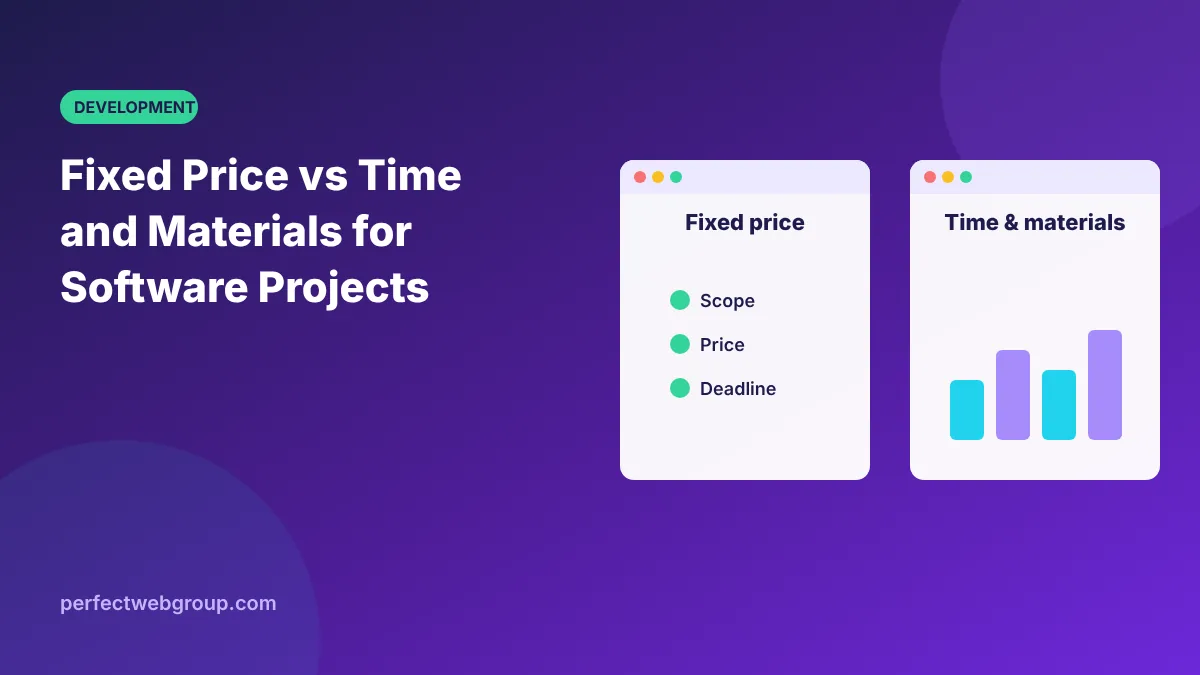
How a software project is priced affects flexibility, risk and the working relationship. The two most common models are fixed price and time and materials.
Fixed Price
A defined scope is delivered for an agreed price.
- Suits: clearly specified projects with stable requirements.
- Benefits: budget certainty.
- Risks: changes require formal change requests; vague scopes lead to disputes.
Time and Materials
You pay for the actual time and resources used, usually against estimates.
- Suits: evolving products, discovery work and ongoing improvements.
- Benefits: flexibility to change priorities.
- Risks: less budget certainty without good tracking and regular reviews.
Hybrid Approaches
Many projects use a fixed-price discovery phase followed by fixed-price milestones, or time and materials with a monthly cap.
Protecting Both Sides
- Write a clear scope and acceptance criteria.
- Agree how change requests are estimated and approved.
- Review progress and budget regularly.
- Define code, hosting and data ownership.
Use our web development RFP checklist to prepare. Our custom software development team offers both models depending on the project.
Frequently Asked Questions
Which model is cheaper?
Neither is inherently cheaper; it depends on how well the scope is defined and how much it changes.
Can we switch models mid-project?
Yes, with agreement, often at a milestone.
What is a change request?
A documented request to add or change scope, with its own estimate.
Comments
Comments appear after admin approval.