
How AI is Revolutionizing Digital Marketing Strategies
Artificial intelligence (AI) is transforming digital marketing by helping businesses understand customers, automate repetitive tasks, personalize experiences, and make faster, data-driven decisions. From AI-powered content creation to predictive analytics and intelligent chatbots, businesses can now reach the right audience with more relevant messages at the right time.
But how exactly is AI revolutionizing digital marketing strategies? And what does it mean for businesses looking to stay competitive in an increasingly digital marketplace and its more leads?
What Is AI in Digital Marketing?
AI in digital marketing refers to the use of artificial intelligence technologies, machine learning, natural language processing, predictive analytics, and automation to improve marketing activities. AI can analyze large volumes of data, identify patterns, predict customer behavior, and support marketers in making strategic decisions.
Unlike traditional marketing approaches that often rely on historical data and manual analysis, AI can process information in real time and continuously improve its recommendations.
How Is AI Changing Digital Marketing?
AI is changing digital marketing in several important ways, including personalization, content creation, customer engagement, search optimization, advertising, and analytics.
1. AI Enables Hyper-Personalization
Customers increasingly expect brands to provide experiences that are relevant to their interests and needs. AI makes this possible by analyzing customer data such as browsing behavior, purchase history, search activity, preferences, and interactions.
Marketers can use these insights to deliver personalized product recommendations, email campaigns, website experiences, and advertisements.
For example, an e-commerce business can use AI to recommend products based on what a customer previously viewed or purchased. This creates a more relevant experience while potentially increasing engagement and conversions.
2. AI Is Transforming Content Creation
Generative AI has made content production faster and more scalable. Marketers can use AI tools to generate ideas, outlines, headlines, product descriptions, social media content, email drafts, and other marketing assets.
However, effective AI-generated content still requires human oversight. Marketers need to verify facts, add original insights, maintain brand voice, and ensure that content genuinely helps the audience.
The strongest strategy is therefore not “AI instead of marketers,” but “AI helping marketers work more efficiently.”
3. AI Improves Customer Experience
AI-powered chatbots and virtual assistants can provide instant responses to common customer questions. They can operate around the clock, helping businesses improve customer support while reducing the workload on human teams.
AI can also analyze conversations and identify frequently asked questions, customer concerns, and purchasing signals. Marketing teams can use these insights to improve their content, products, and customer journeys.
4. AI Makes Predictive Marketing Possible
One of AI's biggest advantages is its ability to identify patterns in historical and real-time data. Predictive analytics can help marketers estimate which customers are most likely to purchase, churn, respond to a campaign, or engage with a particular product.
This allows businesses to move from reactive marketing to proactive marketing.
Instead of asking, “What happened in our previous campaign?” marketers can increasingly ask, “What is likely to happen next, and what should we do about it?”
5. AI Is Changing SEO and Search Marketing
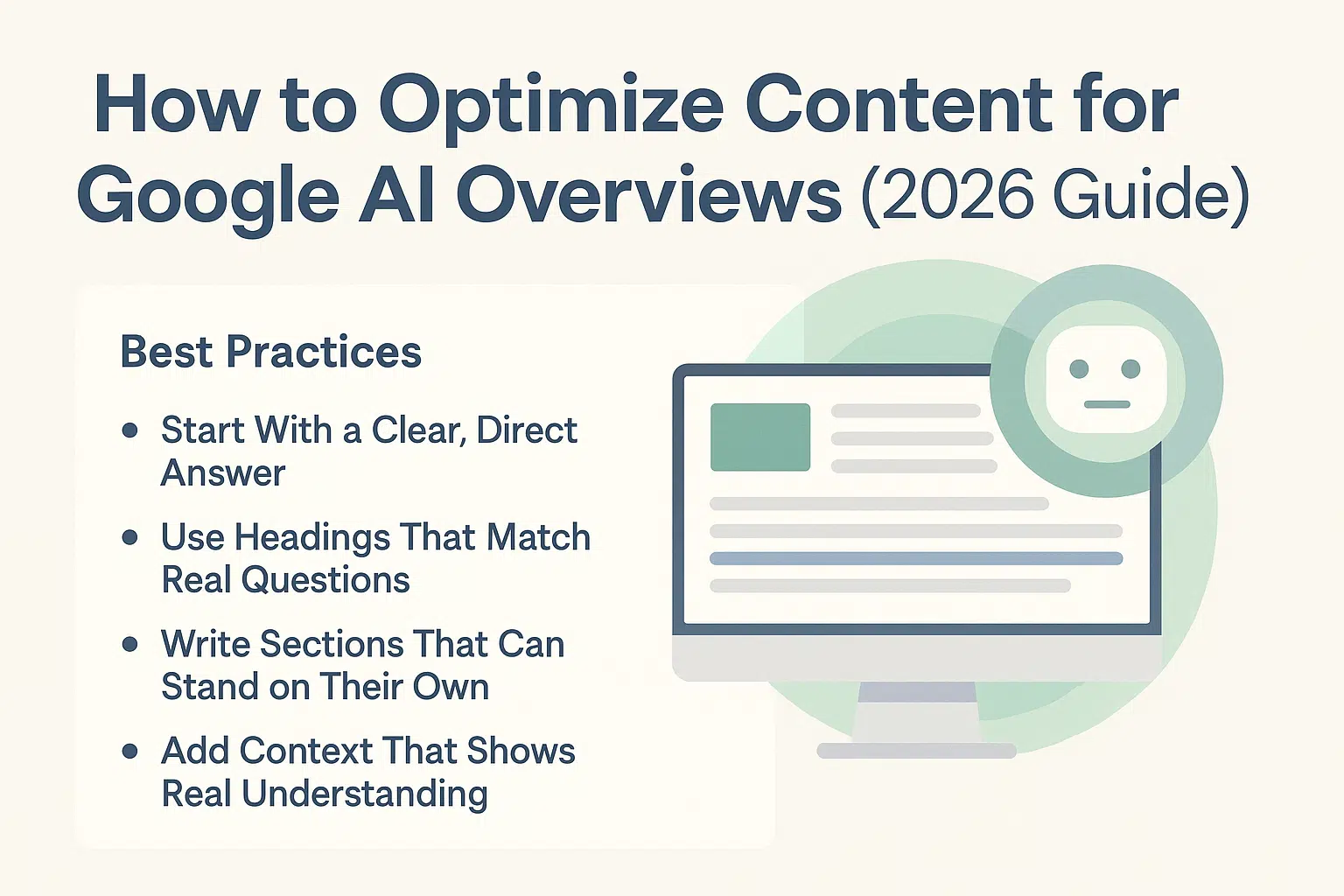
Search behavior is evolving rapidly, particularly with the growth of conversational and AI-powered search experiences. AI can help marketers analyze search intent, identify relevant topics, discover content gaps, and organize information around questions customers actually ask.
For modern SEO, simply targeting keywords is no longer enough. Content should provide clear, accurate, useful answers and demonstrate genuine expertise.
This is where Answer Engine Optimization (AEO) becomes important. AEO focuses on creating content that directly answers user questions in a format that search engines and answer engines can easily understand and potentially surface.
For example, instead of writing a generic section about “AI marketing,” a marketer might answer a specific question such as:
“How does AI improve digital marketing?”
A concise answer could immediately explain that AI improves digital marketing by automating repetitive tasks, analyzing customer data, personalizing campaigns, predicting behavior, and optimizing marketing decisions.
This question-and-answer structure can make content more useful for both users and AI-powered search systems.
6. AI Supports Generative Engine Optimization (GEO)
Generative Engine Optimization, or GEO, focuses on improving a brand's visibility and representation within AI-generated search results and answer experiences.
As users increasingly ask conversational questions rather than entering short keywords, brands need content that is clear, authoritative, well-structured, and supported by reliable information.
A strong GEO strategy can include:
Answering important customer questions directly.
Using descriptive headings and logical content structures.
Providing original insights and useful examples.
Demonstrating expertise and credibility.
Keeping business and product information accurate.
Creating content that is easy for both humans and machines to understand.
AEO and GEO complement traditional SEO rather than completely replacing it.
7. AI Improves Advertising Performance
AI is also changing paid advertising. Advertising platforms can analyze enormous amounts of data to identify audiences, optimize bids, test creative variations, and allocate budgets.
Marketers can use AI to determine which audiences are most likely to convert and which advertisements generate stronger results.
AI can also support creative testing by generating multiple variations of headlines, descriptions, images, and calls to action. Human marketers can then evaluate the results and refine campaigns.
8. AI Helps Marketers Make Data-Driven Decisions
Digital marketing generates huge amounts of data. Without the right technology, turning that information into actionable insights can be difficult.
AI can analyze campaign performance, website behavior, customer journeys, conversion rates, and other metrics to identify trends and anomalies.
This enables marketers to spend less time collecting and organizing data and more time deciding what actions to take.
What Are the Benefits of AI in Digital Marketing?
The major benefits of AI-powered digital marketing include:
Greater personalization: Deliver more relevant experiences to individual customers.
Higher efficiency: Automate repetitive marketing activities.
Better decision-making: Turn large datasets into actionable insights.
Improved customer engagement: Respond to customers quickly and consistently.
Scalable content production: Support the creation of marketing assets at greater speed.
Smarter advertising: Optimize targeting, creative testing, and campaign performance.
Predictive capabilities: Identify potential customer behaviors and trends earlier.
What Are the Challenges of Using AI in Marketing?
Despite its benefits, AI should not be treated as a complete replacement for human expertise. Poorly implemented AI can produce inaccurate information, generic content, privacy concerns, or messaging that lacks authenticity.
Businesses should establish clear processes for fact-checking, data protection, brand governance, and human review. They should also be transparent about appropriate uses of AI.
The goal should be to combine machine efficiency with human creativity, judgment, empathy, and strategic thinking.
The Future of AI in Digital Marketing
The future of digital marketing will likely involve deeper collaboration between marketers and AI systems. AI will increasingly assist with research, personalization, customer service, campaign optimization, predictive analytics, and content workflows.
At the same time, human qualities such as creativity, originality, trust, storytelling, and strategic judgment will remain essential.
For businesses, the competitive advantage will not simply come from using AI. It will come from using AI intelligently while creating genuinely valuable experiences for customers.
Frequently Asked Questions
How is AI revolutionizing digital marketing?
AI is revolutionizing digital marketing by automating repetitive tasks, analyzing customer data, personalizing experiences, predicting behavior, improving advertising, supporting content creation, and helping marketers make data-driven decisions.
How does AI improve SEO?
AI can help marketers understand search intent, identify content opportunities, analyze competitors, optimize content structures, and create useful answers to customer questions. However, human expertise and quality control remain important.
What is AEO in digital marketing?
AEO, or Answer Engine Optimization, is the practice of structuring and optimizing content to provide direct, useful answers to questions that users ask through search engines and answer engines.
What is GEO in digital marketing?
GEO, or Generative Engine Optimization, focuses on improving the likelihood that a brand or its information is accurately represented and surfaced in AI-generated answers and generative search experiences.
Will AI replace digital marketers?
AI is more likely to change the role of digital marketers than eliminate it entirely. Marketers can use AI for automation and analysis while focusing their human skills on strategy, creativity, brand building, and customer understanding.
Related related Topics
AI in Digital Marketing: Explore how artificial intelligence is transforming modern marketing strategies.
AI-Powered SEO: Learn how AI can improve keyword research, content optimization, and search visibility.
Answer Engine Optimization (AEO): Discover strategies for creating content that directly answers user questions.
Generative Engine Optimization (GEO): Understand how to optimize content for AI-powered search and generative answers.
Content Marketing Strategy: Learn how AI can support content planning, creation, personalization, and distribution.
Digital Marketing Trends: Stay updated on emerging technologies and strategies shaping the future of digital marketing. [Dubai Movers and Packers]
Comments
Comments appear after admin approval.