
Sliding vs Swing Shower Glass Enclosures
Sliding vs Swing Shower Glass Enclosures
Once you have decided on a glass shower, the next question is how the door opens: does it slide along the glass, or swing on hinges? It sounds like a small detail, but it changes how the bathroom feels, how much space you need, how well the enclosure seals, and what it costs. This guide compares sliding and swing shower glass enclosures for Dubai homes so you can choose with confidence.
The Core Difference
A swing (hinged) enclosure has a door that opens outward or both ways on hinges, like a normal door. A sliding enclosure runs one or two glass panels along a track, so nothing projects into the room. Both use toughened glass; the difference is purely in the opening mechanism — and that mechanism drives every other trade-off below. If you are still choosing the overall look first, our guide to framed vs frameless shower glass is a good companion read.
Space and Layout
When sliding wins
Sliding doors need zero clearance in front of the shower, which makes them ideal for compact Dubai bathrooms, ensuites, and layouts where a vanity or WC sits close to the shower. Nothing swings into the walkway.
When swing wins
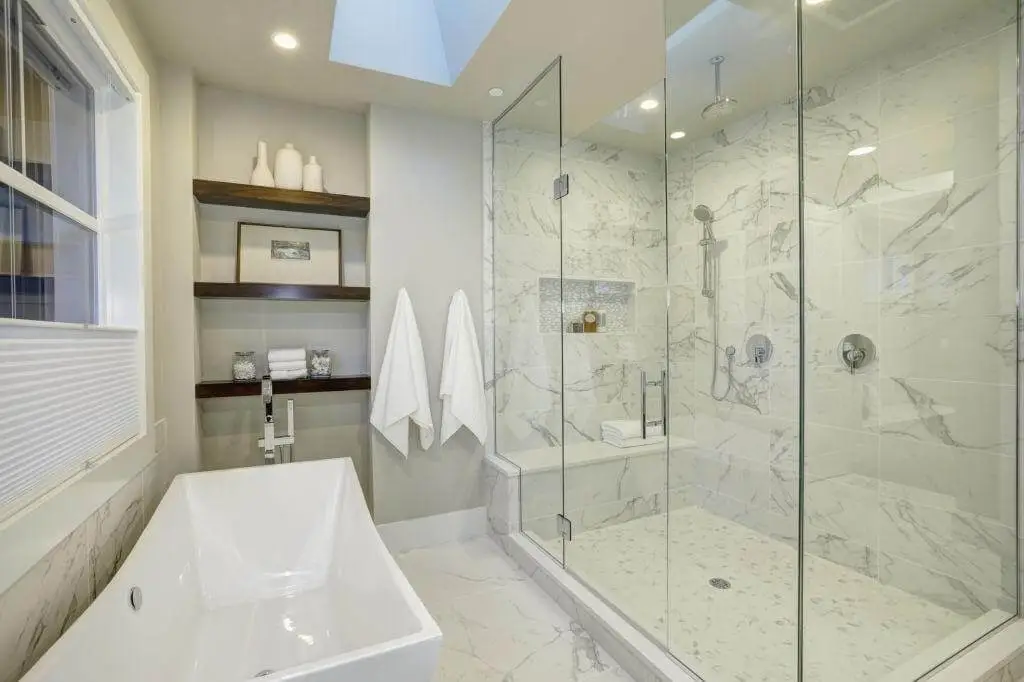
Swing doors suit larger bathrooms and walk-in showers where there is room for the door to open. They give a wider, unobstructed entrance and a cleaner frameless look, as seen across many glass shower partition designs.
Sealing and Water Control
Swing doors, especially frameless ones, tend to seal well because the door meets the frame or glass along a defined edge with a single seal line. Sliding doors have an overlap between panels and a bottom track, which needs good seals and correct fall to stay watertight. Neither leaks when installed properly, but sliding systems have more seal points to maintain. A specialist in shower glass partition systems can advise on seals suited to your tray or wet-room floor.
Glass and Hardware Considerations
Glass: 8mm toughened glass is common for both; 10mm adds rigidity for larger swing doors.
Sliding hardware: Rollers and tracks must be quality items, as they carry the door daily; cheap rollers are the usual failure point.
Swing hardware: Hinges and, for frameless, a correctly rated pivot keep the door aligned.
Maintenance: Sliding tracks need occasional cleaning; swing hinges need periodic checking.
For a shortlist of quality suppliers, see the best shower glass partition options and compare vendors among the top shower glass partition companies in Dubai.
Benefits at a Glance
Sliding enclosures save space, suit small rooms, and never block a walkway. Swing enclosures offer a wider entrance, a more minimal frameless appearance, and simpler sealing. Your choice really comes down to bathroom size and how much clearance you have in front of the shower. If you are also considering a screen over a bath, our note on why to install a bathtub glass screen is worth a look, and a trusted glass company in Dubai can survey your space.
Installation Considerations
For both types, measure after tiling and confirm the floor falls correctly to the drain. Sliding systems need a level, well-supported track and accurate panel overlap. Swing systems need solid fixings for hinges and enough clearance for the door arc. In either case, silicone lines must be neat and continuous, and hardware must be corrosion-resistant to handle constant moisture.
Approximate Price in Dubai
As a rough guide, framed sliding shower enclosures often start around AED 1,200–2,500, while frameless swing (hinged) enclosures with quality hardware typically run AED 1,800–4,500+ depending on size and specification. Sliding systems can appear cheaper at entry level, but premium sliding hardware narrows the gap. Larger openings, thicker glass and special coatings raise either option and sliding vs swing shower enclosure.
Price depends on enclosure type, glass thickness, hardware grade, glass area, coatings and installation complexity such as tray versus wet-room and site access. Figures are approximate; the only accurate number comes from a site measurement and specification.
Frequently Asked Questions
Which is better for a small bathroom, sliding or swing?
Sliding, in most cases. Because the door never projects into the room, a sliding enclosure suits compact bathrooms where a swing door would hit the vanity or WC.
Do sliding shower doors leak more than swing doors?
They have more seal points and a bottom track, so they demand good seals and correct floor fall. Installed properly, both stay watertight; sliding systems simply need a little more seal maintenance.
Are frameless swing enclosures worth the extra cost?
If you have the space, many buyers prefer the wider entrance and cleaner, minimal look. The premium mainly reflects thicker glass and quality hinges or pivots.
Can I convert a swing enclosure to sliding later?
Not directly — the two use different hardware and glass configurations. It is far better to choose the right type at the design stage based on your available clearance.
What glass thickness should I choose?
8mm toughened glass works well for both. Consider 10mm for large swing doors where the extra rigidity keeps the door feeling solid and aligned.
Conclusion
Sliding and swing shower enclosures both deliver a modern glass finish; the right one depends on your space. Choose sliding for compact bathrooms where clearance is tight, and swing for larger rooms where a wide, frameless entrance is the goal. Whichever you pick, prioritise toughened glass, quality hardware and careful installation. A shower glass specialist can measure your bathroom and recommend the best fit.
Comments
Comments appear after admin approval.