
Entity SEO for AI Search Visibility
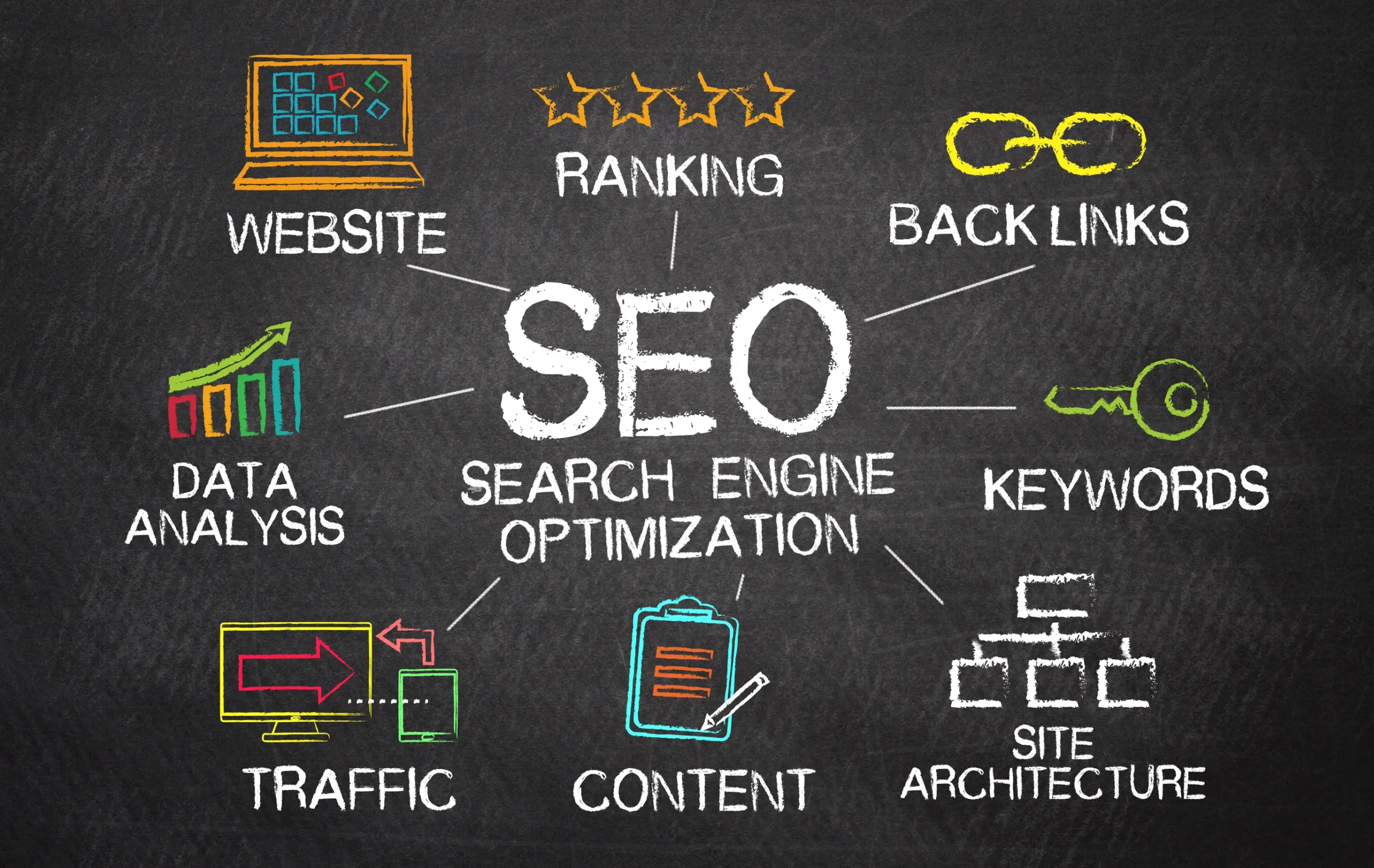
Entity SEO helps search and AI systems understand what a page is about by making real-world people, organizations, services, places, and their relationships explicit. It is not a tactic for repeating a brand name. It is disciplined information management across visible content, site architecture, and supported structured data.
Clear entities reduce ambiguity for users too. A visitor should immediately know who provides a service, where it is available, what the provider does, and how claims can be verified. Start with SEO services or a free website audit for a wider review.
What counts as an entity?
An entity is a distinct thing with an identity: a company, person, office, service, product, event, or place. Words can be ambiguous; relationships provide meaning. “Perfect Web Group” becomes clearer when content connects the name to the organization, its official site, services, location, and work.
Do not create fictional entities to occupy keywords. Use the genuine business structure and public facts.
Create a source of truth
Maintain approved records for the organization name, alternate public name, logo, contact details, locations, founders or leaders, service definitions, and official profiles. Assign ownership and update procedures.
The website, structured data, business profiles, proposals, and public bios should not contradict one another. Small style variations are normal; substantive differences in names, addresses, or roles require correction.
Give important entities a clear page
An organization page can explain identity and purpose. A service page should define the offer, audience, process, constraints, and provider. A location page should identify a real branch and its details. An author page should describe relevant expertise without inflated credentials.
Use the service overview and portfolio as examples of hubs that connect related business information.
State relationships in visible language
Write sentences that name both sides of a relationship: the organization provides the service; the employee holds a role; the project used a method; the branch serves an area. Avoid expecting a logo placement or design proximity to carry all meaning.
Use headings and labels to distinguish services from industries, locations from service areas, and company-authored guidance from customer testimonials.
Reinforce facts with structured data
Select supported schema types that reflect the visible page. Use stable identifiers so references to the same organization or person remain connected. Include only properties that are accurate, maintainable, and relevant.
Structured data should not introduce hidden ratings, unsupported prices, fictional locations, or relationships absent from the page. Validate syntax and meaning after template changes.
Build an internal entity graph
Link organization, service, team, location, portfolio, and educational pages according to real relationships. A project can link to the service it demonstrates; an article can link to the method it explains; a location can link to services actually available there.
Descriptive links help users traverse the graph. Review website development considerations when architecture changes require implementation.
Earn consistent external recognition
Profiles, directories, interviews, partnerships, and industry coverage can reinforce an entity when they are legitimate and accurate. Focus on sources real customers use. Correct important misinformation and recover ownership of abandoned official profiles.
This is not a reason to create hundreds of low-quality listings or self-written “news” pages. External recognition should reflect real activity.
Handle people and expertise carefully
Use accurate bios, roles, areas of experience, and reviewed work. Obtain consent for personal information and keep former-team-member handling consistent. For advice that affects health, law, or finance, qualified review and clear scope are especially important.
Measure entity clarity
Audit branded queries, profile accuracy, duplicate names, knowledge displays, referral sources, and whether users reach the correct service or location. Monitor support and sales questions: repeated confusion about identity or scope signals that the website is unclear.
Analytics and reporting can connect branded discovery to enquiries while respecting privacy and consent.
What does entity SEO cost?
Cost depends on the number of brands, people, locations, languages, legacy profiles, structured-data templates, and approval stakeholders. A single company may need content cleanup; a group with acquisitions may need entity mapping and governance.
Scope discovery, source-of-truth work, website updates, markup, profile correction, and monitoring separately. Entity clarity is ongoing operational work, not a one-time schema installation.
Entity SEO checklist
Inventory organizations, brands, experts, services, and locations.
Approve canonical names and public facts.
Assign a clear page to important entities.
State relationships in visible content.
Use stable internal links and identifiers.
Validate supported structured data.
Correct high-impact public inconsistencies.
Review changes through a documented owner.
Frequently asked questions
Is entity SEO just schema markup?
No. Markup can reinforce meaning, but visible content, architecture, profiles, and consistent facts are equally important.
Does a business need a knowledge panel?
No. A knowledge display can be useful, but the goal is accurate understanding and customer access, not a particular interface.
Should every employee have an author page?
Only when they publish or review content and a page helps users evaluate relevant expertise. Obtain consent and maintain the information.
Can one service be an entity?
A clearly defined service can be represented as an offering connected to its provider, audience, and supporting pages.
How are duplicate brand names handled?
Use location, industry, official domain, legal context, and relationships to disambiguate. Consistency across trusted public sources also helps.
Does entity SEO guarantee AI citations?
No. It improves clarity and reduces ambiguity but cannot guarantee how a generative system selects or presents sources.
Conclusion
Entity SEO is the work of making real relationships clear and maintainable. Define the business accurately, connect its services, people, places, and proof, and reinforce only visible facts. That clarity supports users, search systems, and AI-assisted discovery.
Further Reading: For more information, see this [glass partition price in Dubai].
Comments
Comments appear after admin approval.